
Welcome to Asuka-Fujiwara, the birthplace of Japan.
Clear streams flowing down from lush green mountains
nourished the fields of the villages below, where settlements formed.
Eventually, capital cities were formed, the nation’s name was formalized,
and the framework of the country took shape.
The spirit of that distant ancient era lives on, not only in records,
but also within the lives of people today.
History
Featuring mysterious mounded tombs and the sites of Japan's first capitals,
Asuka-Fujiwara is an open-air museum that conveys 1,400 years of history up to the present day.
Experience the history of the lives of ancient emperors, imperial court members,
and the people who built the imperial palaces and mounded tombs.
-
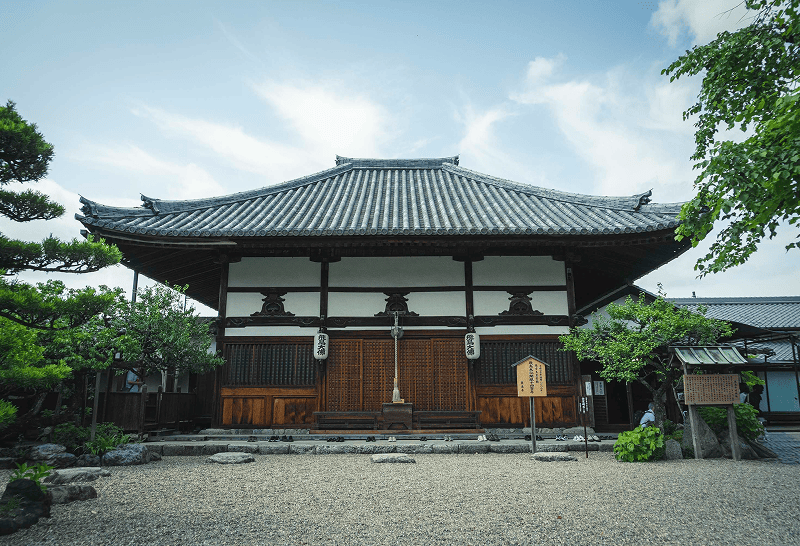
Buddhism is believed to have reached Japan in the middle of the sixth century.
Asuka-dera Temple Site (completed in 596) is the site of Japan’s first Buddhist temple with a fully-fledged temple complex.
The Buddhist wisdom embodied within the statue of Shaka Nyorai (the Asuka Great Buddha), among others, and the advanced architectural techniques introduced to Japan via China and the Korean Peninsula offer a glimpse into exchanges with other regions of East Asia at that time. -
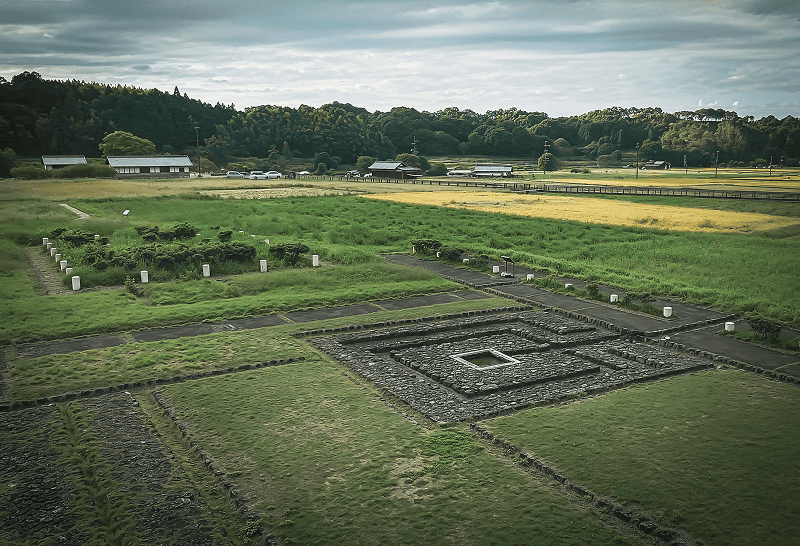
Asuka Palace was built as Asuka Okamoto-no-miya Palace by Emperor Jomei, who succeeded Empress Suiko in 630. Subsequently, it served as the imperial palace for four emperors through four successive periods as Asuka Itabuki-no-miya Palace, Nochi-no-Asuka Okamoto-no-miya Palace, and Asuka Kiyomihara-no-miya Palace.
The layout of the buildings reveals the fact that public ceremonial and governmental facilities were integrated with private residences within the palace.
It became the scene of many historical events, including the Isshi Incident in 645. -
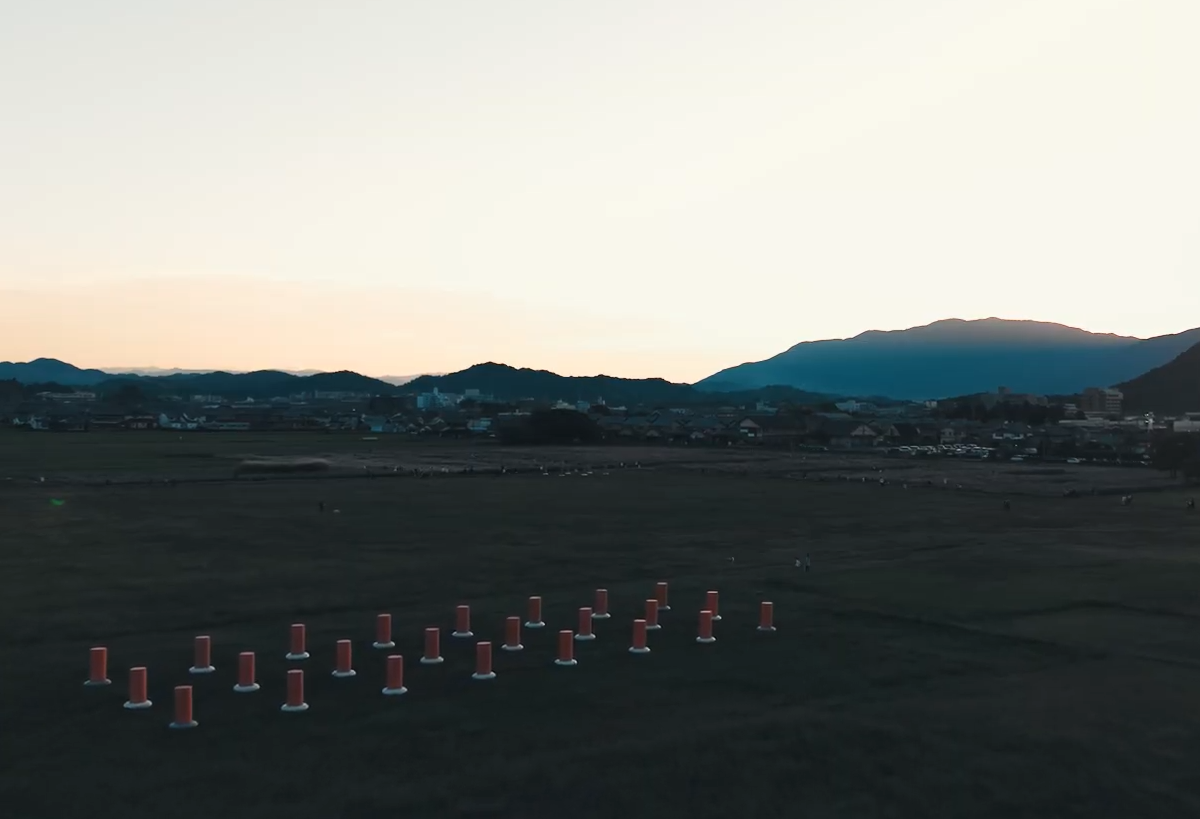
Fujiwara Palace was a palace complex built near the center of Yamato Sanzan, covering a square area of approximately 900 meters.
At its heart were the imperial palace, the Daigokuden (Great audience hall), and Chodoin (State halls), while the government offices of Two Ministries and Eight Departments were built to the east and west, establishing a centralized government system and marking the completion of the state of “Japan” under the ritsuryō state system.
With Fujiwara Palace at its heart, a grid-patterned capital city, extending 5.3km to each side, took shape.
Daikandaiji Temple and Motoyakushiji Temple were established to its southeast and southwest as symbols of the spiritual protection of the state.
Culture
In today's Asuka-Fujiwara region, people's lives are rooted in historical heritage.
Throughout the ages, they have lived alongside profound history and culture.
Experience the unique culture of this area, where ancient heritage harmonizes with daily life.
-
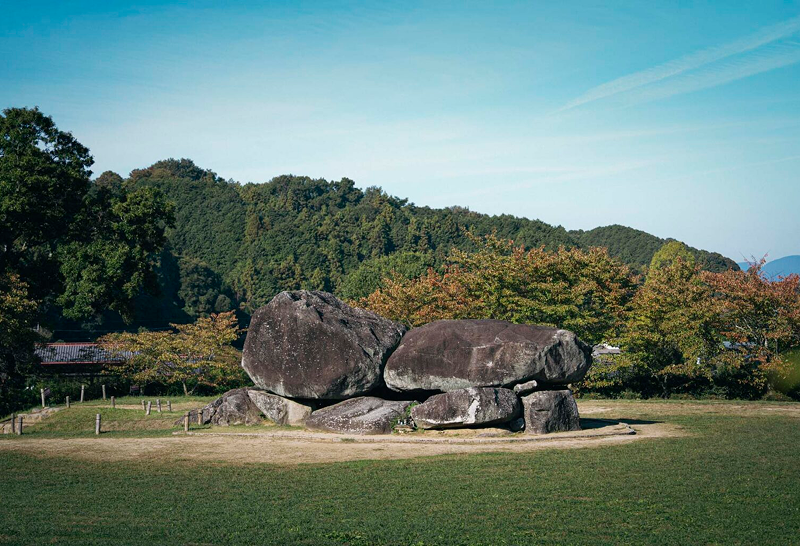
Ishibutai Mounded Tomb is theorized to be the tomb of Soga no Umako, a powerful figure in that era (The Nihon Shoki).
The massive capstone of the horizontal chamber tomb is exposed at the top of the mound, clearly showing the shape of the mounded tomb.
It was introduced in its present form in the late Edo publication “Illustrated Guide to the Thirty-Three Sacred Sites in the Saigoku Region” and was already known as a tourist attraction at that time. -
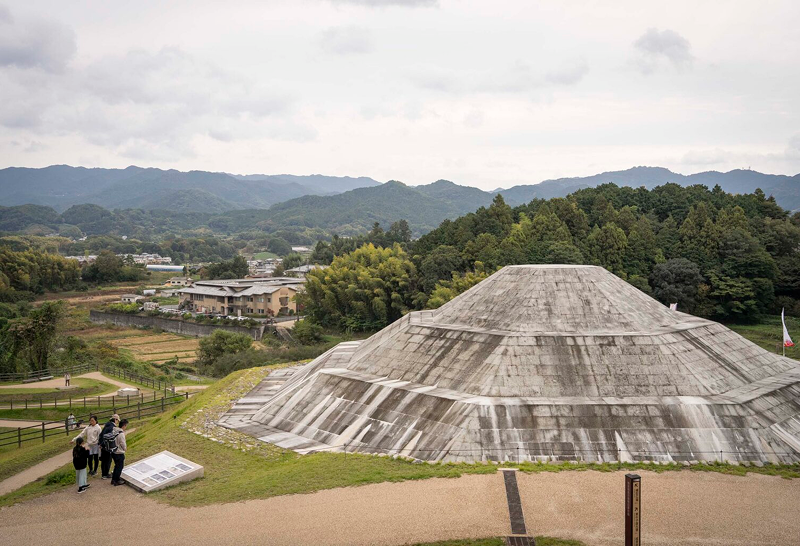
Kengoshizuka Mounded Tomb is an octagonal mounded tomb, which was created to replace square mounded tombs.
It was built with the goal of establishing a centralized state with the emperor at its apex. This tomb is unique in Japan, adopting ideas and techniques from the Chinese mainland while taking on a distinctly Japanese form.
It was built in the late 7th century to the southwest of the Asuka Basin, where sites like the Asuka Palace Site can be found. -
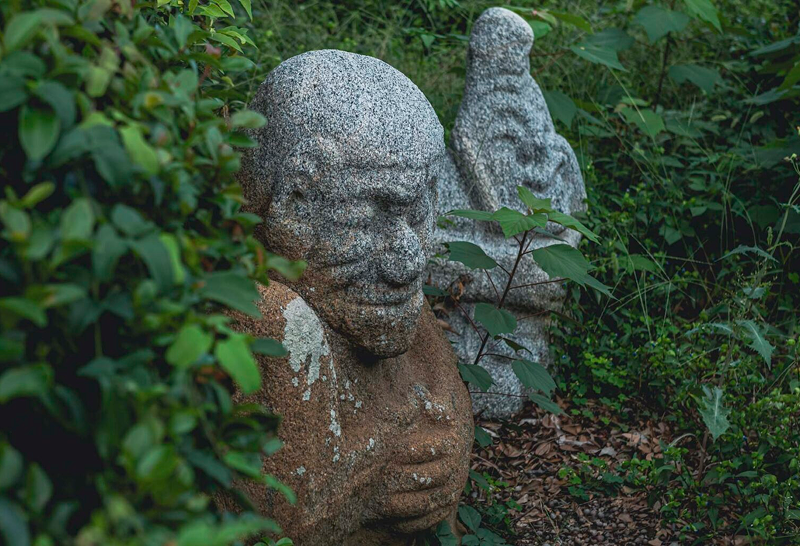
The Tomb of Princess Kibihime (a granddaughter of Emperor Kinmei) is traditionally identified as a small round tomb located adjacent to the mausoleum of Emperor Kinmei.
On the western side of this tomb stand four granite stone statues known as the Saruishi (Monkey Stones), which are said to represent, respectively, a woman, Sannō Gongen, a Buddhist monk, and a man.
Various theories have been proposed regarding their identity—including the Dosojin (roadside deity) theory and the stone haniwa theory—but their true nature remains unknown.
Nature
Throughout history, humanity has lived by enjoying nature’s bounties.
The Asuka-Fujiwara area is also home to tales of people and nature,
cultivated over a long history.
Enjoy the bounds between nature and people who live in harmony with nature.
-
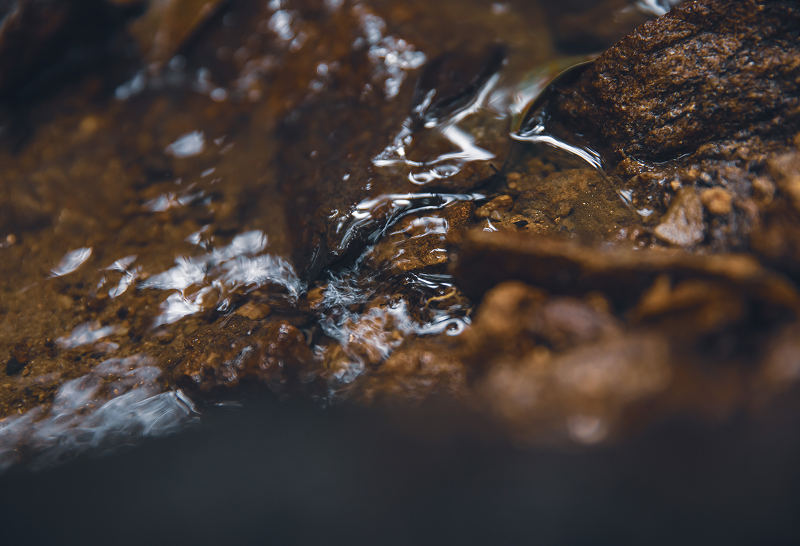
Clear streams flowing down from lush green mountains nourish fields and brought blessings to rural life.
The people here cherish nature and nurture traditional culture through local festivals.
This “original landscape of Japan,” where nature and human lives have blended over a long period of time, can still be found in the satoyama areas of Asuka-Fujiwara. -
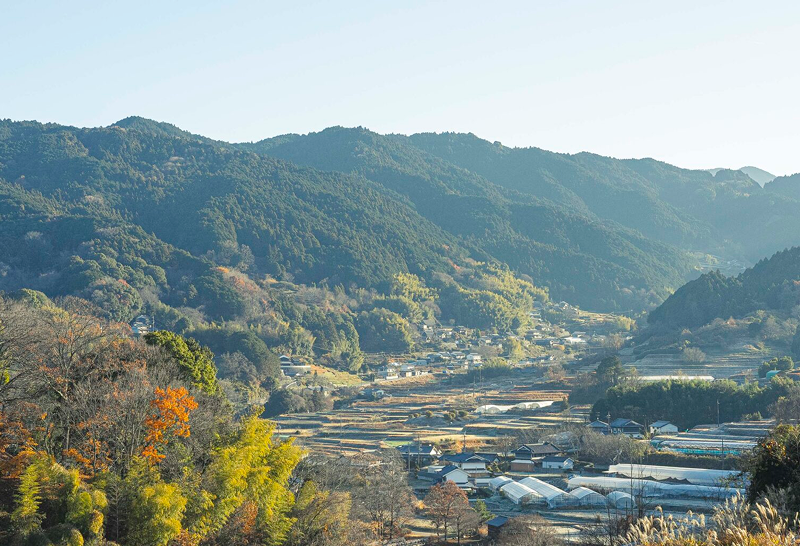
The three villages of Inabuchi, Kayamori, and Iriya, located near the source of the Asuka River at the southern tip of Asuka village — an area known as Oku-Asuka — have been designated as an Important Cultural Landscape by the Agency for Cultural Affairs as part of the “Cultural Landscape of Oku-Asuka.”
In particular, Inabuchi boasts some of the region's most extensive terraced rice fields and is where the Rope Hanging Ritual and Obon welcoming and sending-off ceremonies are held. -
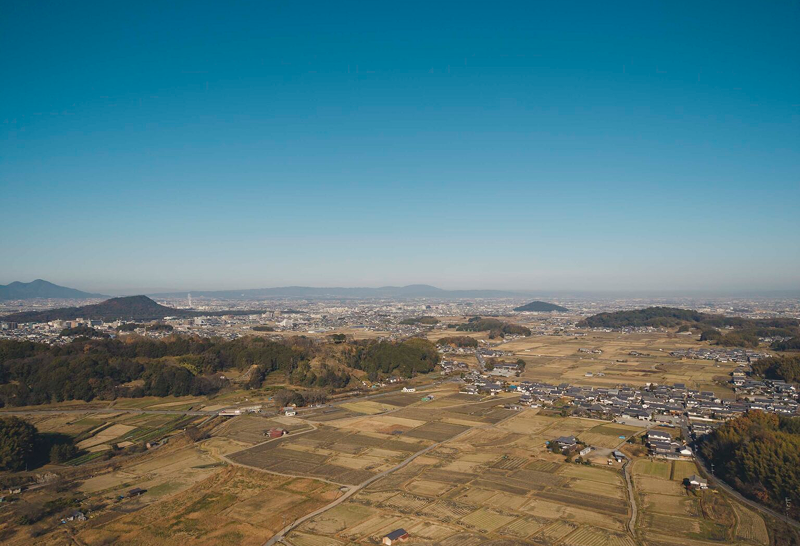
Numerous historical sites have been built in the Asuka-Fujiwara area over its long history. In these areas, efforts to preserve the coexistence of people’s lives, the nature that changes with the seasons, and historical assets have been traditionally passed down. Notably, the entirety of Asuka village is designated as a Historic and Natural Landscape Preservation District under the Act on Special Measures concerning Preservation of Traditional Scenic Beauty in Ancient Capitals and the Act on Special Measures concerning Preservation of Traditional Scenic Beauty and Improvement of Living Environment in Asuka Village.